Sunday, November 18, 2012

Frankenstein: Page 149-166


Frankenstein
By: Mary Shelley


"Seek happiness in tranquility, and avoid ambition...I have myself been blasted in these hopes, yet another may succeed (Page 162)." As the novel closes the themes, lessons, and morals presented throughout once more are suggested and challenged. While the reader seeks answers, they are left with questions and dual emotions. In the final pages, Victor accepts his death and passes on to the next life while the creature presents his remorse and purpose of actions. Through it all, the reader still feels complexity as they fight to understand and classify Victor and the creature as either good or bad. Yet, in analyzing such, I find a theme more desolate and unclear than the others such as the caution of knowledge and ambition. In my own search to understand the characters' dispositions, I feel that Mary Shelley leaves the truth untouched and open so as to suggest the openness required in an honorable search of knowledge. The openness correlates to relationships to perhaps suggest an aphorism of society as culture is often quick to classify people as good or bad when all poses characteristics of both and seek good. While the novel is presented as a horror story and nightmare, I think it is intended as an anecdote of an unconstrained and unchecked culture and mind. 

Frankenstein: Page 136-149


Frankenstein
By: Mary Shelley

From the beginning of the novel to the closing end, diction serves a valuable and influential role in establishing imagery and foreshadowing events. In describing the creation, others reactions, and his own view of himself, Victor states, "I abhorred the face of man...they would abhor me (Page 137)." The power of the diction used throughout the novel, as in the use of the power verb in the phrase above, encompassed the true emotional complexity and intensity felt by the characters. It illustrates the true horror of the actions and challenges faced. It illustrates the true sorrow, hatred, fear, and remorse. It illustrates the story. In guiding and directing the tale and the connections the reader makes, diction also serves as a powerful tool in devising the path of the characters and foreshadowing future events. Such is evident in the important plot-changing phrase, "Those were the last moments of my life during which I enjoyed the feeling of happiness (Page 142) ." In this simple phrase strategically placed, Mary Shelley creates suspense and anticipation, thus pushing the reader further and deeper into the novel. The literary technique of foreshadowing focuses the reader upon the emotional transitions and guides the reader to analyze what is yet to come. In the diction and word choice, not only do the characters become trapped by the wording and emotions, but so too does the reader. 

Frankenstein: Page 114-136


Frankenstein
By: Mary Shelley


A constant aspect and characteristic that both guides and directs the novel is setting. The setting is used by Mary Shelley to reflect mood changes, illustrate a change in the direction of the story, and characterize or bring to life the emotions and experiences of the characters. From Chapter XVI to Chapter XIX, the setting changes over 12 times, thus emphasizing this section as a climax and time of immense change. 

Beginning in October, Victor and Henry first begin their embankment to London by traveling to Windsor. Their journey takes them to Windsor, Oxford, Mattock  Cumberland, Westmorland, Edinburgh, Couper, St. Andrew's, Perth, Orkney Islands, and Ireland. While this change serves the purpose of illustrating the progression in the novel, I believe it also illustrates a progression in the characters. It presents a shift from fear of death to embracing death, slavery to creation and knowledge to facing and fighting for freedom, and an attempt to resolve the past by moving forward. Victor himself describes the setting by saying, "It was a monotonous yet ever-changing scene (Page 119)." This phrase illustrates the inconsistency yet the importance of setting as it created a despairing mood and set the scene of darkness and desolation as "The voyage came to an end (Page 136)." With the end of the voyage, came the eventual end of the creature. 

Frankenstein: Page 97-114


Frankenstein
By: Mary Shelley


Throughout the story of Frankenstein by Mary Shelley, characters find themselves interconnected and their stories intertwined. This union and parallelism begins in the first letters and introductory parts of the novel as Robert Walton and Victor Frankenstein are presented as doubles who both thirst for knowledge by blinding ambitions, long for friendship in adventure and glory, and have a past similar in both nature and characters. Then, as the story becomes focused upon Victor Frankenstein and his creation, a second set of doubles is presented within the embodiment of Frankenstein and the creature. 

"The human senses are insurmountable barriers to our union (Page 104)." As the creature itself states, Frankenstein and the creature are united by their similarities in emotions and qualities. Their defining difference may be their physical appearance, but their emotions and experiences connect them. Even as their paths grow apart, their stories become connected. As Victor recovers from his illness and adjusts back into society, the creature recovers from his confusion and attempts to enter society. As Victor tries to reach home, but is unable to, the creature to connect to the family, but is unable to. As Victor seeks happiness and relief from the creature, the creature seeks happiness and relief from loneliness. 

Through the frame stories of Victor, Frankenstein, and the creature, Mary Shelley presents parallelism through doubles. As each story is presented and becomes interconnected, the aspect of doubles reinforces and strengthens the themes presented in the novel. It is through doubles and parallelism that the separate stories find themselves complexly and deeply intertwined. 


Frankenstein: Page 81-97


Frankenstein
By: Mary Shelley


From Chapter XIII to Chapter XVI, the story takes a new path and new twist. Previously focused primarily on the story of Victor Frankenstein, the tale now terns to the story of his creature's development. This story illustrates the impacts of the past on the present and informs the reader of the creature's progress.

A key element used in the creature's story is that of metaphors. These metaphors provide comparisons and vivid descriptions by relating the creature to other people or events. One such example is illustrated in the phrase, "As yet I looked upon crime as a distant evil; benevolence and generosity were ever present before me, inciting within me a desire to become an actor in the busy scene where so many admirable qualities were called forth and displayed (Page 90)." This passage indicates that the creature is like a distant actor in his past. The creature is unconnected intrinsically to his past actions of evil intent as the creature himself is inherently good, but following the role of evil and violence. Slowly, however, the creature realizes that such a role begins to describe his life, and that is when the creature once more meets Frankenstein, his creator, and the play becomes real. This metaphor can also be extended to not only the creature, but also the family who act as distant actors in the creature's life. In this metaphor, the creature represents the audience as he constantly watches the story plot develop through the family's daily actions. Their story becomes, in a sense, a fairy-tale that the creature longs to be apart of and which he eventually enters. 


Thursday, November 15, 2012

Frankenstein: Page 65-81


Frankenstein
By: Mary Shelley


In her own writing, Mary Shelley makes numerous references or allusions to outside sources and literature. Such an allusion is made by the creation itself as the creature describes himself saying, "Remember, that I am the creature; I out to be thy Adam...(Page 69)" This is a reference to the creation story of the Catholic faith as Frankenstein's creation describes himself as a being that was made in the image of goodness, but which did bad as Adam sinned. Further allusions are made as to "the ass and the lap-dog" to compare the ironic punishing of good behavior as the monster is punished simply for his appearance despite his intrinsic goodness. Countless allusions are made throughout the novel such as to the Canto III and Ariosto's Orlando Furioso. These allusions serve a powerful purpose in connecting the past to the present. Additionally, the allusions connect the tale to society  just as the monster connects outside information to his understanding of people and culture. The characters of the other stories serve the importance of illustrating what the characters are truly like in Mary Shelley's novel. Most importantly, it adds to the depth of the tale as it further develops the frames story stile.  By connecting the story to outside sources, the book becomes connected to society. It is through these allusions that the novel fully establishes clear meaning and becomes the timeless masterpiece it has become. 

Frankenstein: Page 46-65


Frankenstein
By: Mary Shelley


Storms are powerful aspects of nature that transform the course of the future in minutes. Throughout the novel, Frankenstein, Mary Shelley uses storms as a symbol and for imagery. For, storms not only signify important events, but also represent the conflict of knowledge and the war between life and death.

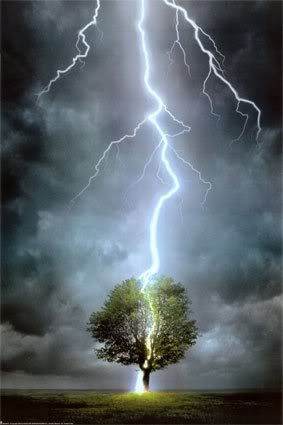
"The storm...at once in various parts of the heavens (Page 50)." Storms are used continuously within the novel to connect life on earth with immortality and greater powers. The storms are used to signify important points as in the lightning struck tree which inspired his passion for science and search for knowledge. Additionally, a storm surrounds the events of Frankenstein's scientific creation, the murder of his brother, and the climbing of the mountain in pursuit of the monster. Furthermore, the storms serve as symbols of power. Just as the terribleness of a storm can bring goodness and life, death can bring eternal life. Additionally, storms bring relief as from drought just as death brings relief from suffering. The lightning within the storms , as connected with the tree often serves as a symbol of understanding and the sudden acquisition of new knowledge. In addition to illuminating knowledge, the lightning reveals the monster as Frankenstein searches for it. The thunder represents rolling threats and fears. According to the text, the storms act as an analogy for a "noble war." As a light in the darkness, storms highlight change.